As a supplier of outdoor battery cabinets, understanding effective heat dissipation methods is crucial. Outdoor battery cabinets house various types of batteries, such as lithium – ion batteries, lead – acid batteries, etc. These batteries generate heat during charging and discharging processes, and if the heat is not properly dissipated, it can lead to a series of problems, including reduced battery life, decreased performance, and even safety hazards. In this blog, I will introduce several common heat dissipation methods for outdoor battery cabinets. Outdoor Battery Cabinet
Natural Convection
Natural convection is one of the most basic and cost – effective heat dissipation methods. It relies on the natural movement of air caused by temperature differences. When the batteries in the cabinet generate heat, the air inside the cabinet warms up, becomes less dense, and rises. As the warm air rises, cooler air enters the cabinet from the lower vents, creating a continuous air flow.
To enhance natural convection in an outdoor battery cabinet, proper ventilation design is essential. Vents should be strategically placed at the bottom and top of the cabinet. The lower vents allow fresh, cool air to enter, while the upper vents facilitate the exit of warm air. For example, rectangular or circular vents can be installed, and the size and number of vents should be calculated based on the heat generation rate of the batteries and the size of the cabinet.
However, natural convection has its limitations. Its heat dissipation efficiency is relatively low, especially in high – temperature environments or when the batteries generate a large amount of heat. It may not be sufficient to maintain the optimal temperature range for the batteries alone.
Forced Air Cooling
Forced air cooling is a more efficient heat dissipation method compared to natural convection. It uses fans to actively circulate air inside the cabinet, improving the heat exchange rate.
Axial fans are commonly used in outdoor battery cabinets for forced air cooling. These fans are designed to move a large volume of air in a direction parallel to the axis of the fan blade. By installing axial fans at the intake or exhaust vents of the cabinet, the air flow can be significantly increased.
In a forced – air – cooled battery cabinet, the fans are usually controlled by a temperature – sensitive device. When the temperature inside the cabinet rises above a certain set point, the fans start to operate. Once the temperature drops below the set point, the fans may slow down or stop, saving energy.
One of the advantages of forced air cooling is its relatively high efficiency and flexibility. It can quickly remove heat from the cabinet and is suitable for cabinets with different heat generation levels. However, the fans themselves consume energy, and they also require regular maintenance to ensure proper operation. Dust and debris can accumulate on the fan blades over time, reducing their performance.
Heat Pipe Cooling
Heat pipe cooling is a highly efficient heat transfer technology. A heat pipe is a closed tube filled with a working fluid, usually a refrigerant. The heat pipe has three main sections: the evaporator section, the adiabatic section, and the condenser section.
When the heat from the batteries is transferred to the evaporator section of the heat pipe, the working fluid inside the heat pipe absorbs the heat and evaporates. The vapor then travels through the adiabatic section to the condenser section, where it releases the heat and condenses back into a liquid. The liquid then returns to the evaporator section by capillary action or gravity, starting the cycle again.
In an outdoor battery cabinet, heat pipes can be installed in direct contact with the batteries or heat – generating components. The condenser section of the heat pipe can be placed outside the cabinet, where the heat can be dissipated to the ambient air more easily.
Heat pipe cooling has several advantages. It has a high heat transfer coefficient, which means it can transfer a large amount of heat with a relatively small temperature difference. It is also a silent and reliable heat dissipation method, as there are no moving parts other than the flow of the working fluid inside the heat pipe. However, heat pipes can be relatively expensive to manufacture, and their performance may be affected by factors such as the inclination angle of the heat pipe and the quality of the working fluid.
Air – to – Air Heat Exchanger
An air – to – air heat exchanger is another way to dissipate heat from an outdoor battery cabinet while keeping the internal environment sealed. This device consists of two separate air channels: one for the internal air of the cabinet and the other for the external ambient air.
The heat exchanger uses a thermally conductive material, such as aluminium or copper fins, to transfer heat from the warm internal air to the cooler external air without the two air streams mixing. This helps to prevent dust, moisture, and other contaminants from entering the cabinet, protecting the batteries and other components.
The operation of an air – to – air heat exchanger is based on the principle of heat conduction and convection. The internal air circulates through one side of the heat exchanger, giving up its heat to the fins. The external air then flows over the other side of the fins, absorbing the heat and carrying it away.
One of the main advantages of an air – to – air heat exchanger is its ability to maintain a clean and stable internal environment for the batteries. It is also relatively energy – efficient compared to some other cooling methods. However, the initial investment cost for an air – to – air heat exchanger can be high, and its performance may be limited by the temperature difference between the internal and external air.
Liquid Cooling
Liquid cooling is a very effective but more complex heat dissipation method. In a liquid – cooled outdoor battery cabinet, a coolant, such as water or a special cooling fluid, is used to absorb heat from the batteries.
The liquid cooling system usually consists of a liquid pump, cooling pipes, a radiator, and a coolant reservoir. The coolant is circulated through pipes that are in contact with the batteries or placed on heat – generating surfaces. As the coolant absorbs heat from the batteries, it is pumped to the radiator, where the heat is dissipated to the ambient air.
Liquid cooling can provide a more uniform temperature distribution within the cabinet compared to other methods. It can also handle high heat loads effectively. However, liquid cooling systems are more complex to install and maintain. There is a risk of leakage, which can cause damage to the batteries and other components. The cost of the system, including the coolant, pump, and radiator, is also relatively high.
Hybrid Cooling Solutions
In many cases, a single heat dissipation method may not be sufficient to meet the requirements of an outdoor battery cabinet. Therefore, hybrid cooling solutions that combine two or more methods are often used.
For example, a combination of forced air cooling and heat pipe cooling can be very effective. The forced air cooling can provide a basic level of air circulation, while the heat pipes can quickly transfer heat from hot spots to the cooler areas of the cabinet. Another option is to combine an air – to – air heat exchanger with natural convection for a more energy – efficient and contamination – free solution.
When choosing a heat dissipation method or a hybrid cooling solution for an outdoor battery cabinet, several factors need to be considered. These include the heat generation rate of the batteries, the ambient temperature and humidity conditions, the required temperature range for the batteries, the space available for the cooling system, and the budget.
As a reliable supplier of outdoor battery cabinets, we have rich experience in designing and implementing various heat dissipation solutions. Our technical team can analyze your specific requirements and customize the most suitable heat dissipation system for your outdoor battery cabinet. Whether you need a simple natural – convection – based design or a complex hybrid cooling solution, we can provide professional advice and high – quality products.
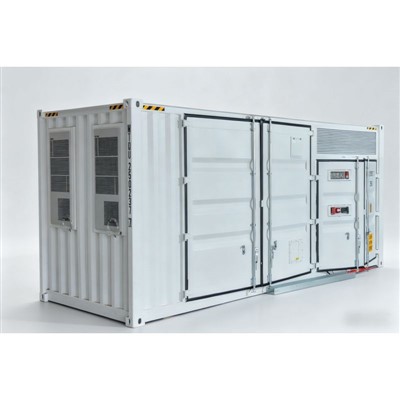
If you are interested in our outdoor battery cabinets and want to learn more about our heat dissipation solutions, or if you have a specific project in mind and need a customized solution, please feel free to contact us. We are eager to engage in in – depth discussions with you and work together to meet your needs.
Solar Connector References
-赖静, Lu, J., & Amine, K. (2013). Thermal issues in lithium – ion batteries. Chemical Reviews, 114(2), 1144 – 1161.
-廖达雄, Nitta, N., Wu, F., Lee, J. T., & Yushin, G. (2015). Li – ion battery materials: present and future. Materials Today, 18(5), 252 – 264.
- Qian, J., Yang, X. – G., Liu, P., & Wang, C. Y. (2014). Thermal management of lithium – ion batteries for electric vehicles: A review. Energy & Environmental Science, 7(8), 2460 – 2474.
Tianjin Xilingke New Energy Technology Co., Ltd.
As one of the most professional outdoor battery cabinet manufacturers and suppliers in China, we’re featured by quality products and low price. Please rest assured to wholesale durable outdoor battery cabinet made in China here from our factory. For quotation, contact us now.
Address: Suite 2601, Tower B, Wanghai International, Haihe East Road, Hebei District, Tianjin, China.
E-mail: robin@sinelinkev.com
WebSite: https://www.sinelinkenergy.com/
