Hey there! I’m a supplier of suspended ceiling baffles, and I often get asked how these funky-looking things can actually cut down on reverberation. Well, let me break it down for you in a way that’s easy to understand. Suspended Ceiling Baffles
First off, what’s reverberation? You know when you’re in a big empty room and you clap your hands, and the sound just keeps bouncing around for a bit? That’s reverberation. It happens when sound waves hit hard surfaces like walls, floors, and ceilings, and then bounce back. This can make it hard to understand people talking, and it can be a real pain in places like classrooms, offices, and theaters.
So, how do suspended ceiling baffles come to the rescue? Well, it all boils down to the way they interact with sound waves. These baffles are usually made of materials that are good at absorbing sound. When a sound wave hits a baffle, instead of bouncing right off like it would off a hard surface, a good chunk of that sound energy gets absorbed by the baffle material.
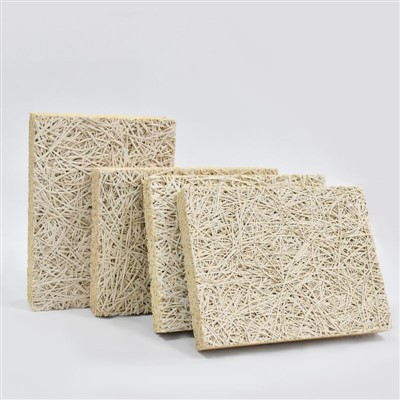
Most of the suspended ceiling baffles I sell are made of things like fiberglass or mineral wool. These materials have a porous structure. Think of them like a sponge, but for sound. When a sound wave enters the pores, it has to travel through all these tiny, winding paths. As it does, the sound energy gets converted into a little bit of heat. Yeah, you heard me right – sound energy turns into heat! It might not seem like much, but when you’ve got a whole bunch of sound waves hitting these baffles, it adds up, and a lot of the sound that would’ve been bouncing around the room gets gobbled up.
Another cool thing about suspended ceiling baffles is the way they’re arranged. They’re usually hung from the ceiling in a staggered or parallel pattern. This creates a kind of irregular surface for the sound waves to encounter. When sound waves hit this uneven arrangement, they scatter. Instead of bouncing back in an organized way, they go off in all sorts of different directions. This scattering makes it harder for the sound to build up into a big, long – lasting reverberation.
Let’s take a classroom as an example. In a classroom without ceiling baffles, the teacher’s voice can bounce off the walls and ceiling multiple times. Students at the back might have a hard time understanding what’s being said because of all the overlapping echoes. But when you install suspended ceiling baffles, the teacher’s voice gets absorbed and scattered. The sound becomes clearer, and students can focus better on the lesson.
It’s not just about reducing the overall reverberation time. It also helps to balance the sound in the room. In a large open – plan office, for instance, there could be areas where the sound is louder or where reverberation is worse. By strategically placing suspended ceiling baffles, you can even out the sound levels. You can reduce the amount of sound reflecting from the ceiling in those noisy spots, making the whole office a more comfortable and productive place to work.
Now, let’s talk about the different types of suspended ceiling baffles and how they affect reverberation. There are rectangular baffles, which are the most common. They’re great for general sound absorption and are easy to install in a grid pattern. Then there are triangular or cylindrical baffles. These are more effective at scattering sound because of their unique shapes. The curved or angled surfaces of these non – rectangular baffles cause sound waves to bounce off in more unpredictable ways, further reducing the chances of a strong reverberation.
But it’s not all about the shape. The size of the baffles matters too. Larger baffles generally absorb more sound because they have more surface area for the sound waves to hit. However, smaller baffles can be more effective at scatter sound in different directions. So, in some cases, you might want a combination of both large and small baffles to get the best results.
The density of the baffle material is also a crucial factor. A denser material can absorb more high – frequency sounds, while a less – dense one might be better at absorbing low – frequency sounds. Depending on the type of sound you’re trying to control, you can choose baffles with different densities. In a music studio, for example, you might need a mix of high – and low – density baffles to properly control the different frequencies of the music.
Installation is key too. If the baffles aren’t installed correctly, they won’t work as well. They need to be hung at the right height and with the right spacing. Usually, the closer they are to each other, the more effective they’ll be at reducing reverberation. But you also don’t want to over – do it and block the air circulation in the room.
I’ve seen some really amazing transformations in spaces where we’ve installed suspended ceiling baffles. A noisy restaurant can turn into a cozy place where people can have conversations without shouting. A large industrial warehouse can become a more comfortable place for workers, as the constant noise from machinery is reduced.
So, if you’re dealing with a space that has too much reverberation, whether it’s a small meeting room or a huge auditorium, suspended ceiling baffles could be the solution you’re looking for. They’re a cost – effective and easy way to improve the acoustics of your space.
If you’re interested in learning more about how our suspended ceiling baffles can reduce reverberation in your specific space, or if you want to talk about a potential purchase, don’t hesitate to reach out. We’ve got a team of experts who can help you choose the right baffles and give you advice on installation. Let’s work together to make your space a quieter, more comfortable place!
PET Acoustic Panels References
- Beranek, Leo L. "Acoustics." American Institute of Physics, 1954.
- Fahy, Frank J. "Foundations of Engineering Acoustics." Academic Press, 2001.
- Rossing, Thomas D. "The Science of Sound." Addison – Wesley, 2007.
Guangzhou MQ Acoustic Materials Co., Ltd.
Guangzhou MQ Acoustic Materials Co., Ltd. is one of the most professional suspended ceiling baffles manufacturers and suppliers in China, featured by quality products and low price. Welcome to buy CE approved suspended ceiling baffles in stock here and get quotation from our factory. We also accept customized orders.
Address: Room D403, KeZhu Business Building, ZhuJi Road, TianHe District, GuangZhou, China
E-mail: Lizzy@mq-acoustics.com
WebSite: https://www.acoustic-projects.com/
