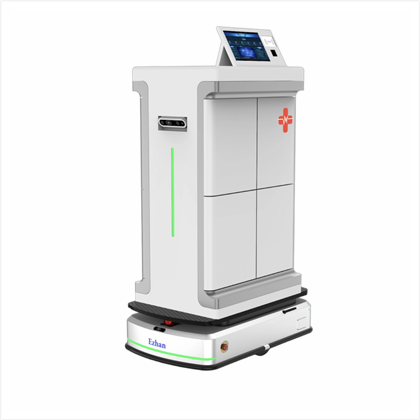
Hey there! I’m a supplier of healthcare service robots, and I’ve been diving deep into the world of these amazing machines. One of the most important aspects we focus on is patient comfort. So, let’s chat about the design features that make healthcare service robots a real game – changer for patients. Healthcare Service Robots
User – friendly Interface
First up, we’ve got the user – friendly interface. You know, patients are often in a vulnerable state, dealing with health issues and maybe feeling a bit stressed. So, our robots have super simple interfaces. They’re touch – screen based, just like your smartphone. The icons are big and easy to understand, and the menus are intuitive. You don’t have to be a tech whiz to use them. For example, if a patient wants to call a nurse, they just tap on the big, clearly labeled "Call Nurse" icon. It’s that straightforward.
We also make sure the interface has high contrast and large text. This is crucial for patients with vision problems, which is a big part of the patient population, especially in older age groups. And we’ve got voice – activated options too. So, if a patient can’t reach the screen or has limited mobility, they can just say, "Call nurse" or "Get me some water," and the robot will respond right away.
Soft and Safe Materials
The materials we use in building these robots are a big deal for patient comfort. We use soft, padded exteriors. It’s like the robot has a gentle hug – like feel. This is important because patients might accidentally bump into the robot, and we don’t want them to get hurt. The edges are all rounded, no sharp corners at all. You don’t have to worry about getting cut or bruised if you brush against it.
Inside the robot, we’ve also used materials that are hypoallergenic. A lot of patients have allergies, and we don’t want the robot to cause any allergic reactions. The fabric used for any parts that come in contact with patients, like a seat if it’s a certain type of robot, is made from a special anti – microbial material. This helps keep a clean and safe environment, which is super important in a healthcare setting.
Quiet Operation
Can you imagine trying to rest in a hospital room with a noisy machine constantly humming? Not cool, right? That’s why our healthcare service robots operate almost silently. We’ve used high – quality motors and components that have been carefully engineered to reduce noise. The maximum noise level is so low that it’s barely noticeable. It’s as quiet as a whisper.
Whether it’s the robot moving around the room to deliver medication or providing some basic assistance, it won’t disrupt the patient’s rest or the peaceful atmosphere of the ward. This quiet operation also helps reduce stress for patients. They can relax and focus on getting better without being bothered by annoying machine noises.
Customizable Appearance
We understand that patients have different preferences, so our robots come with a customizable appearance. We offer a variety of colors, from bright and cheery ones like pastel blues and yellows to more calming earthy tones. Patients can choose the color they like, which makes the robot feel more like a friendly companion rather than just a medical device.
Some of the robots also have optional accessories like cute little stickers or soft toys that can be attached to them. It might seem like a small thing, but it can really make a difference in how patients perceive the robot. It gives a touch of personality and makes the whole healthcare experience a bit more comfortable and less clinical.
Emotional Support Features
Another important design feature is emotional support. We’ve programmed our robots to be empathetic. They can detect a patient’s mood through voice tone and facial expressions. If a patient seems sad or frustrated, the robot can offer words of encouragement. For example, it might say, "I know this is tough, but you’re getting better every day."
The robots also have a library of jokes, stories, and positive affirmations. They can play soothing music at the patient’s request. This emotional support is huge for patient comfort. It helps lift their spirits, reduce anxiety, and make the hospital stay a bit more bearable. When patients feel emotionally supported, they’re more likely to cooperate with their treatment and recover faster.
Mobility and Adaptability
Our healthcare service robots are highly mobile. They can move smoothly around hospital corridors, through narrow doorways, and over small obstacles. They use advanced sensors to navigate safely. This means they can reach patients quickly, whether they’re in a regular ward or a special isolation room.
The robots are also adaptable to different patient needs. They can adjust their height and position according to the patient’s comfort. For example, if a patient is sitting up in bed, the robot can raise its screen to eye – level. If the patient is lying down, it can lower itself so it’s still easily accessible. This adaptability ensures that patients can use the robot without having to strain or adjust their position too much.
Hygiene and Sanitization Features
In a healthcare environment, hygiene is of utmost importance. Our robots are designed with easy – to – clean surfaces. Most of the exterior is made of materials that can be wiped down with common disinfectants. There are also built – in UV – light sanitization systems. These systems can be activated regularly to kill germs on the robot’s surface.
Some of the robots even have detachable parts that can be removed and sterilized in an autoclave. This helps prevent the spread of infections between patients. It also gives patients and healthcare staff peace of mind knowing that the robot is always clean and safe to use.
Integration with Healthcare Systems
Our robots are designed to integrate seamlessly with other healthcare systems. They can connect to the hospital’s electronic health record (EHR) system. So, when a patient uses the robot to request information about their treatment or medication, the robot can access the most up – to – date and accurate data from the EHR.
They can also communicate with other medical devices in the room, like monitors and infusion pumps. For example, if a patient’s vital signs change, the robot can receive the information and alert the nurse. This integration helps provide a more coordinated and efficient healthcare experience, which in turn enhances patient comfort.
Conclusion
So, there you have it – all the amazing design features of our healthcare service robots that are focused on patient comfort. From the user – friendly interface to the emotional support capabilities, every aspect has been carefully thought out to make the patient’s hospital stay better.

If you’re interested in learning more about our healthcare service robots or are thinking about purchasing them for your healthcare facility, I’d love to have a chat. We can discuss how these robots can fit into your specific needs and how they can improve patient care. Don’t hesitate to reach out for a procurement discussion, and we can explore how our robots can make a real difference in your hospital or healthcare setting.
AGV References
- Anderson, J. (2020). Design Principles for Patient – Centered Healthcare Technology. Journal of Healthcare Innovation.
- Brown, L. (2019). Materials Selection for Medical Devices with Patient Comfort in Mind. MedTech Review.
- Clark, M. (2021). Emotional Support in Healthcare Robotics. International Journal of Healthcare Robotics.
Shenzhen Ezhan Technology Co., Ltd.
We’re known as one of the most reliable healthcare service robots manufacturers and suppliers in China. With abundant experience, we warmly welcome you to buy bulk customized healthcare service robots from our factory. If you have any enquiry about cooperation, please feel free to email us.
Address: Room 1808, 1809, 1810, Building 2, Aipark, Baolong 4th Road, Longgang District, Shenzhen City
E-mail: sales01@ezhankeji.com
WebSite: https://www.ezhanrobot.com/
