If you’ve ever shopped for faux rock—whether for a backyard waterfall, a commercial building’s facade, or a public park’s landscape feature—you’ve probably found yourself asking the same question: Why does that realistic rock we installed last year have a noticeable scratch, and how do I avoid that with a supplier that knows what it’s doing? As someone who’s been in the faux rock manufacturing and supply game for 12 years, I get it. Scratches aren’t just a cosmetic flaw—they can erode the authentic stone look your client paid for, and even lead to moisture damage over time if they penetrate the material. Today, I’m pulling back the curtain on how our team designs, tests, and delivers faux rock that stands up to the kind of wear and tear most products can’t, because too many suppliers cut corners that come back to haunt their customers. Faux Rock
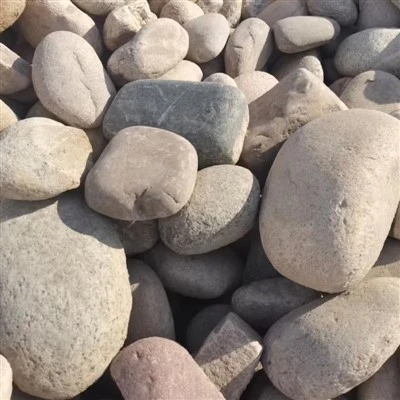
First, let’s get one thing straight: Not all faux rock is created equal. I’ve seen hundreds of installments over my career, from residential clients who wanted a backyard fire pit that looked like it belonged in the Rockies to city parks that needed durable landscape boulders for play areas. The biggest mistake I see new buyers make is assuming “faux rock” is just lightweight concrete carved into a shape. That’s the stuff that scratches the second you drag a hose over it, or gets scuffed by a stray lawnmower within a year of installation. The scratch resistance of faux rock starts long before it leaves our warehouse—it starts with the base material we choose, and that’s where most competitors go wrong.
Our core faux rock formula isn’t just plain concrete. We mix high-strength fiberglass-reinforced polymer (FRP) with modified Portland cement, a blend that’s denser than standard cast concrete but far more flexible. Wait, flexible? That might sound counterintuitive for a product that needs to resist scratches, but hear me out. Rigid, brittle faux rock cracks when it’s hit, and scratches—deep, permanent ones—when it’s dragged or bumped. Our blend flexes slightly under impact, which means it doesn’t chip, scuff, or scratch as easily as stiffer materials. We tested this ourselves last year: I arranged for our quality control team to drop a 5-pound metal wrench from 3 feet onto a sample of a competitor’s basic concrete faux rock, and it left a gouge 2 inches long. We did the same test on our FRP-modified sample, and it barely left a faint smudge. That’s the baseline for all our products, no exceptions.
Next, the surface finish. This is the part that makes faux rock look real, and also the part that’s most vulnerable to scratches. Many suppliers use a simple acrylic topcoat, which is cheap and dries fast but scratches at the lightest contact—think a kid climbing over a faux boulder and leaving fingernail scratches, or a maintenance worker brushing against it with a long-handled broom. We don’t do that. Our team applies a two-part polyurethane topcoat to every piece, fortified with aluminum oxide. Aluminum oxide is the same mineral used in sandpaper, only we mix it into the topcoat at a ratio that gives it scratch resistance without making it rough to the touch. It’s enough to stand up to abrasion from lawn equipment, playground gear, and even harsh cleaning chemicals, but smooth enough that it looks like natural stone, not a sanded piece of plastic.
I’ll be honest, though—even the best material and finish aren’t enough if the installation team doesn’t handle the pieces right. We work with our customers to provide specific guidelines for handling their faux rock on-site, because even durable pieces can get scratched if you drag them across gravel instead of lifting them. Last quarter, a commercial client of ours tried to save a few bucks by hiring a local installation team that didn’t use our guidelines, and they dragged a 200-pound faux waterfall boulder across a pile of crushed stone when moving it into place. The team left three visible scratches on the base. Instead of charging extra for repairs, we went out on a service call (we do that for all our long-term clients) and buffed and touched up the scratches in less than an hour, no cost. That’s part of what separates us from suppliers who disappear once their products hit the loading dock.
Now, let’s talk about what happens when a scratch does occur, because even with the best design, accidents are inevitable. Faux rock that’s been scratched—especially if the scratch penetrates the topcoat—can develop another problem: water damage. Natural stone is porous, but many faux rock products are too, which means if a scratch gets all the way through, water can seep into the core material, freeze in cold climates, and cause the rock to crack or crumble over time. Our product’s core is non-porous, so even if a scratch gets deep, water can’t soak in and cause structural damage. That’s a huge selling point for clients in places like Minnesota or Canada, where winter freeze-thaw cycles wreck all kinds of building materials. We’ve had a customer in Calgary report his faux rock landscape boulders are still scratch-free and structurally sound after seven years, which is unheard of for most brands.
I’ve also had to address a common myth: Faux rock can never be as scratch-resistant as real rock. That’s true—for a hard impact, natural granite will outperform any synthetic product. But who’s going to drag a real 1,000-pound granite boulder across their lawn, or bump it with a lawnmower? Faux rock is designed for practical use, not to withstand the kind of abuse that only quarried stone can. Our goal is to make it scratch-resistant enough to hold up to the normal wear and tear of everyday use, while being lightweight, easy to install, and way cheaper than natural stone. That balance is what our customers value most.
Last year, we expanded our product line to include faux rock for commercial playgrounds, a category where scratch resistance is non-negotiable. Playground equipment is pushed, pulled, and climbed on hundreds of times a day, and any scratch that becomes rough can be a safety hazard for kids. We worked with a playground construction company in Texas to test our new line: over a 6-month period, the install team dragged equipment across our faux rock boulders, had kids run against them with metal slides, and even power-washed them with high-pressure cleaners. The only mark we found was a tiny scuff on one piece, which our touch-up kit fixed in 10 minutes. The company ended up ordering 40 more pieces for their next three projects, which told me we got the formula right.
But scratch resistance isn’t just about materials and finishes—it’s about quality control. I’ve seen suppliers cut corners here too: they’ll cast a batch of faux rock, let it dry for 24 hours, slap on a cheap topcoat, and ship it out. Our team tests every single piece before it leaves our warehouse. We have a standardized scratch test where we rub a steel wool pad (grade 0000, the standard for testing surface durability) back and forth 10 times on each section of a rock. If it leaves a noticeable scratch, that piece goes back to be re-finished. We also test for impact resistance by dropping a 10-pound weight from 4 feet onto every batch sample. If it chips or cracks, the entire batch is rejected. That might mean we turn away a few orders sometimes, but our customers know they’re getting a product that’s been vetted, not just shipped.
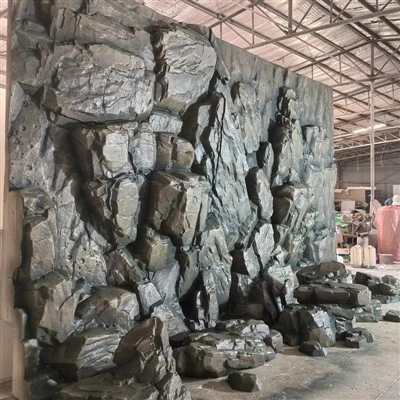
I get that when you’re shopping for a faux rock supplier, you’re looking for more than just a product—you’re looking for peace of mind. You don’t want to worry about a scratch ruining a project you’ve spent months planning, or having to make costly repairs a year after installation. That’s why we’ve built our business around delivering durable, realistic faux rock that stands the test of time. Whether you’re a homeowner looking for a backyard fire pit, a landscape architect planning a city park, or a construction company working on a commercial building, we can create custom faux rock pieces that fit your needs, with the scratch resistance you can count on.
Landscape Boulders If you’re ready to learn more about how our faux rock handles scratches, or to discuss a project of your own, feel free to reach out to our team to connect for a procurement conversation. We’re here to answer any questions you have, walk you through our testing process, and help you find the right products for your next project.
References
- ASTM International. (2020). Standard Test Method for Abrasion Resistance of Organic Coatings by the Taber Abraser. ASTM D4060-20.
- Zhang, Y., et al. (2019). Mechanical and Durability Properties of Fiber-Reinforced Polymer-Modified Concrete for Architectural Applications. Journal of Materials in Civil Engineering, 31(8), 04019107.
- Landscape Industry Association. (2022). Durability Standards for Synthetic Landscape Materials. LIA Technical Report 101-22.
Xinglong Landscape Greening Co., Ltd.
We are one of the most professional faux rock manufacturers and suppliers in China, also support customized service. We warmly welcome you to wholesale bulk high quality faux rock in stock here from our factory. If you have any enquiry about pricelist, please feel free to email us.
Address: Xiaoluli Natural Village, Wutongshan Village, Meishan Town, Changxing County, Huzhou City, Zhejiang Province
E-mail: 18667092034@163.com
WebSite: https://www.xinglonggreen.com/
