Hey everyone,
I’m Jake, and if you’ve ever ordered elastic bands from my company, you know we don’t just toss a random stretchy thing into a box—every single band we send out has been tested to make sure it does exactly what you need it to do. A question I get all the time from new customers, especially small business owners who use bands for packaging or craft stuff, is: “How do you actually measure the stretch force of an elastic band? It just ‘feels’ stretchy, right?” Elastic Band

Nope, it’s not just a vibe. Stretch force (we sometimes call it “tensile force” when chatting with the factory guys) is the make-or-break number for whether a band will hold a pallet tight through shipping, snap mid-assembly on a product line, or stay flexible enough for a kid’s craft project. Let me walk you through what we actually do in our quality lab—no fancy PhD jargon, just the real process we’ve refined over 10 years of supplying bands to all kinds of industries.
First, let’s get one thing straight: stretch force isn’t just “how far it can stretch.” That’s a common mistake we see. If you stretch a band twice its original length, some will give easy, some will barely move, but the force needed to pull that far is way different than the force it takes to hold a load at that stretched length. We measure both, depending on what the customer needs, but the core test starts with a super simple tool—wait, not just a ruler and a pull, we use a digital force gauge. Think of it like a tiny, super accurate scale that measures how hard something pulls or pushes, not how much it weighs. Ours is a basic one, not some million-dollar lab machine, perfect for small batches or bulk runs.
Here’s the step-by-step that we actually follow, not some textbook recipe. First, we have to prep the band right. You can’t take a random band off a roll and test it—elastic gets affected by temperature a lot, believe it or not. If it’s 90 degrees in our warehouse, the bands stretch easier than if it’s 60 degrees. So we always let the bands sit in our test area for 24 hours at a consistent 70°F (that’s standard room temp, most people can agree on that) so we’re testing them in the same conditions every time. Also, we don’t use broken or pre-stretched bands—we cut a 6-inch length from a roll, right at the end where the roll is new, no frayed edges or any pre-stretching. Pre-stretching would throw the numbers off, because that’s what the band’s already gone through before you even get it.
Next, we mount the band to the force gauge. This part sounds dumb, but mounting wrong makes all your numbers garbage. We use two small clamps—soft rubber-lined ones, not metal jaws that can dig into the elastic and weaken it (that’s a rookie mistake we caught early on, we used to use metal clamps and got weird inconsistent readings). We set the distance between the clamps to 4 inches, not 6, because if the distance is longer, the band has more room to stretch, and the force number goes up. Standard gauge length is 4 inches for most of our bands, unless a customer specifically asks for a different length—like if they use tiny bands for electronics, we use a 2-inch test length to match their actual use.
Once the band’s clamped in, we turn on the force gauge and pull it straight up at a super slow, steady speed. The speed matters a lot—if you yank it fast, you get a higher force reading than if you pull slow. We pull at 12 inches per minute, that’s the ISO standard for elastic testing, and it works for us. As we pull, the gauge is recording force every split second, so we get a graph of how much force is needed at every length the band stretches.
Wait, so what numbers do we actually care about? Two main ones, honestly. First is “break force”—that’s how much force it takes to snap the band. If a customer is using bands to secure heavy pallets, we need bands with a high break force, like 50+ pounds, so they don’t snap mid-transit. If someone’s using bands for hair ties or craft projects, break force is lower, like 10 pounds, so they don’t yank a kid’s hair. The second number is “holding force” at a specific stretch. For example, if a customer stretches a band to twice its original length to wrap a box, we measure how much force that stretched band exerts—because that’s the pressure it’s putting on the box, not just how hard you pulled it to stretch. That’s the number they need to make sure the box stays closed, not the break force.
We also do a test called “repeat stretch” to make sure the band doesn’t get weak after being stretched a bunch of times. Like, if a company uses bands over and over for packaging, we stretch a band to 50% of its max length 100 times, then test the force again. If the holding force drops more than 10%, that’s a bad band, we don’t send it. This is why our bulk bands are reliable—we don’t just test one band out of every 10, we test 10 random bands from each bulk box. If even one is off, we test more or reject the whole batch.
I should mention, a lot of people ask why we don’t just use the old “pull between two people and guess” method. We tried that when we first started, and it was a disaster. One guy’s strength is way different than another’s, and they’ll pull at different speeds. We once had a customer order 100,000 bands that they thought had 20-pound stretch, but our manual test said 10, and they had to send them all back. That’s when we bought our first force gauge, and never looked back. Now we can give exact numbers, like “our medium clear elastic bands have a break force of 25 pounds, holding force of 15 pounds at 100% stretch,” no guesswork.
Of course, there are exceptions. For specialty bands, like heavy-duty rubber bands for construction or UV-resistant bands for outdoor use, we adjust the test. UV-resistant bands get tested in a UV chamber for 72 hours first, to make sure stretch force doesn’t drop after being in the sun. Heat-resistant bands go through a quick bake at 120°F before testing, to simulate warehouse or truck heat. We never use the same test for every product, because our customers use their bands in different ways.
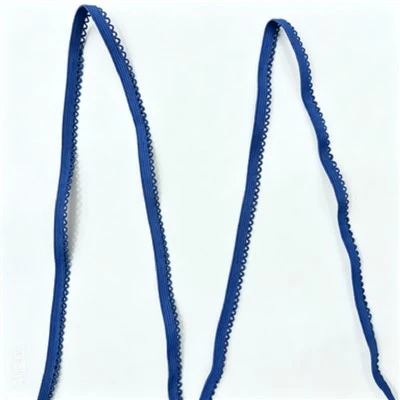
At the end of the day, the whole point of measuring stretch force is simple: we want our customers to get bands that work for their exact job, no surprises. If you’re tired of bands that snap mid-use or don’t hold what you need, let’s chat. Whether you need small batches for a craft business or bulk rolls for a manufacturing line, we can hook you up with bands that have been tested to your exact specifications, and give you all the stretch force numbers you need to be confident in your order. Don’t guess—reach out, and we’ll make sure you get the right elastic for the job.
Braided Elastic Band References
ASTM D412 – Standard Test Methods for Vulcanized Rubber and Thermoplastic Elastomers – Tension
ISO 37:2017 – Rubber, vulcanized or thermoplastic – Determination of tensile stress-strain properties
Elastic Band Performance Testing: A Practical Guide for Packaging and Industrial Applications
Zhongshan Meiya Weaving Co., Ltd.
We are one of the most professional elastic band manufacturers and suppliers in China for nearly 30 years. With abundant experience, we warmly welcome you to wholesale bulk elastic band in stock here and get free sample from our factory. We also accept customized orders.
Address: No. 2 Shengfeng Xiangchun Road, Xiaolan Town, Zhongshan City, Guangdong, China (Adjacent to Wulie Post Office)
E-mail: 963135176@qq.com
WebSite: https://www.meiyaweaving.com/
