What are the Standard Sizes of Compression Springs?
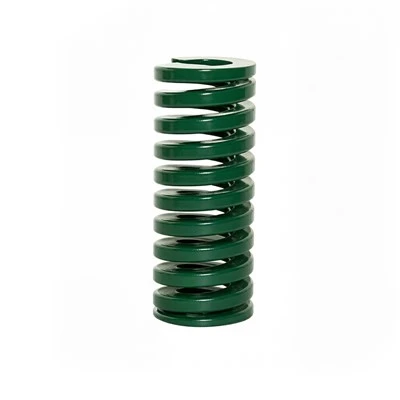
Hello, everyone! As a seasoned supplier of compression springs, I’m excited to share in – depth knowledge about the standard sizes of compression springs with you. Compression springs are one of the most common types of springs, and they play a crucial role in various industries, from automotive and aerospace to consumer electronics and medical devices. Understanding their standard sizes is essential for both design engineers and procurement professionals. Compression Spring
The Basics of Compression Springs
Before delving into the standard sizes, let’s briefly review what compression springs are. A compression spring is an open – coiled helical spring that offers resistance to a compressive force applied axially. When a load is applied, the spring compresses, storing potential energy, and then returns to its original shape once the load is removed. The design and size of a compression spring are determined by several factors, including the application, the load it needs to bear, the available space, and the material used.
Key Dimensions of Compression Springs
There are several key dimensions when it comes to defining the size of a compression spring:
Outer Diameter (OD)
The outer diameter is the maximum diameter of the spring, measured across the outside of the coils. It is a critical dimension as it determines how the spring will fit into its housing or the space provided in the assembly. In the market, common outer diameters for compression springs range from very small sizes, such as 0.5 mm, which are used in micro – electronics, to large diameters up to 300 mm or more for heavy – duty industrial applications. Smaller OD springs are often made with finer wire and are used in applications where space is limited, like in watches or small electronic switches. Larger OD springs, on the other hand, can handle higher loads and are used in machinery, vehicles, and construction equipment.
Inner Diameter (ID)
The inner diameter is the measurement across the inside of the coils. It is important in applications where a rod or a shaft must pass through the center of the spring. Calculating the inner diameter is relatively straightforward; it is the outer diameter minus twice the wire diameter (ID = OD – 2d, where d represents the wire diameter). For example, if a compression spring has an outer diameter of 10 mm and a wire diameter of 1 mm, the inner diameter would be 8 mm. Standard inner diameters vary widely depending on the application requirements, but a common range might be from 1 mm for small – scale springs to over 250 mm for large industrial springs.
Wire Diameter
The wire diameter refers to the thickness of the wire used to make the spring. A thicker wire generally results in a stronger spring that can withstand higher loads. Commonly, wire diameters for compression springs can range from as thin as 0.1 mm for delicate applications to 25 mm or more for heavy – duty industrial springs. The choice of wire diameter is closely related to the load – bearing capacity and the stiffness of the spring. For instance, in a pen mechanism, a very thin – wire compression spring is used to provide just enough force to operate the mechanism smoothly, while in a car suspension system, a thick – wire spring is needed to support the weight of the vehicle and absorb shocks.
Free Length
The free length is the length of the spring when it is not under any load. This dimension is crucial because it affects how much the spring can compress and how much energy it can store. Spring free lengths can range from a few millimeters for small springs used in precision instruments to several meters for large – scale springs in specialized industrial equipment. When designing a product, engineers need to consider the available space and the required range of motion to select an appropriate free length. For example, a small switch spring might have a free length of 5 mm, while a large shock – absorbing spring in construction machinery could have a free length of 2 meters.
Pitch
The pitch of a compression spring is the distance between adjacent coils when the spring is in its free state. It is an important factor that affects the spring’s performance, such as its flexibility and the way it compresses. A larger pitch generally results in a more flexible spring, while a smaller pitch creates a stiffer spring. The pitch is often adjusted based on the specific requirements of the application. For example, in a valve spring, a specific pitch is chosen to ensure smooth opening and closing of the valve under different operating conditions.
Number of Coils
The number of coils in a compression spring also impacts its performance. Generally, the more coils a spring has, the more flexible it is, and the less force it takes to compress the spring over a given distance. Springs can have as few as two or three coils for very short and stiff springs, to hundreds of coils for long and highly flexible springs. For example, a little compression spring in a ball – point pen might have around 10 – 15 coils, while a long – travel spring in a heavy – duty shock absorber could have 50 or more coils.
Industry Standards for Compression Springs
There are several industry standards that govern the sizes of compression springs. For example, in the United States, the American National Standards Institute (ANSI) and the Society of Automotive Engineers (SAE) have set standards for different types of springs, including compression springs. These standards cover aspects such as material properties, dimensional tolerances, and testing methods.
In the international arena, the International Organization for Standardization (ISO) also provides guidelines. ISO standards ensure that compression springs manufactured anywhere in the world meet certain quality and dimensional requirements, which is particularly important for global supply chains. Adhering to these standards guarantees that the springs are interchangeable and reliable in different applications.
Selecting the Right Standard Size
When it comes to selecting the right standard size of a compression spring, a thorough understanding of the application is essential. Here are some steps to help you make the correct choice:
Determine the Load Requirements
First and foremost, you need to figure out how much load the spring will need to bear. This involves considering factors like the maximum and minimum loads during operation, the frequency of the load application, and any dynamic or shock loads. For example, in an automotive engine valve spring, the load requirements are determined by the forces needed to open and close the valve reliably at high – speed engine operation.
Consider the Space Constraints
The available space in the assembly is a significant factor. Measure the area where the spring will be installed, including the diameter and length dimensions. Make sure that the selected spring can fit within these boundaries without causing any interference. For example, in a mobile phone, the space for a compression spring used in the camera module is extremely limited, so the spring’s outer diameter, inner diameter, and free length must be carefully chosen.
Evaluate the Performance Characteristics
Based on the application, you need to consider the spring’s stiffness (spring rate), which is the amount of force required to compress the spring by a certain distance. A higher spring rate means a stiffer spring. You also need to think about factors like fatigue life, which is how many times the spring can be compressed and released before it fails. In a high – cycle application like a pager vibration motor, the spring must have a long fatigue life.
Check Compatibility with Existing Components
If the spring is part of an existing system, ensure that its size is compatible with other components. For example, if the spring needs to fit over a shaft, the inner diameter must match the shaft diameter.
Our Role as a Compression Spring Supplier
As a compression spring supplier, we have a wide range of standard – sized compression springs in stock. We understand that different industries have different requirements, and we are committed to providing high – quality products that meet or exceed industry standards. Our team of experts can assist you in selecting the right size and type of compression spring for your specific application.
We also offer customization services. If your project requires a compression spring that doesn’t fit into the standard sizes, our experienced engineers can design and manufacture a custom – made spring for you. We use state – of – the – art manufacturing equipment and advanced quality control systems to ensure that every spring we produce is of the highest quality.
Contact Us for Procurement
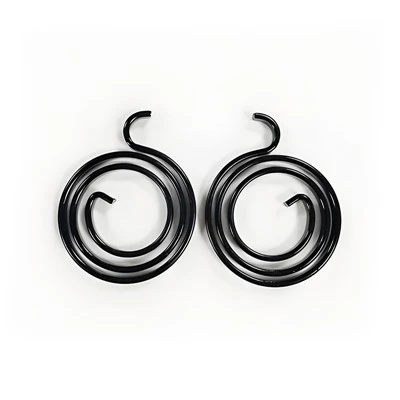
Spiral Spring If you are in the market for compression springs, whether you need standard sizes or custom – made solutions, we’d love to hear from you. Our team is ready to provide you with detailed product information, quotations, and support throughout the procurement process. Simply reach out to us, and we’ll work together to find the perfect compression spring for your needs.
References
- "Mechanical Springs Handbook", by the Spring Manufacturers Institute
- "Design of Machine Elements", by V. B. Bhandari
- ISO Standards related to springs, published by the International Organization for Standardization
- ANSI and SAE standards on springs, available from the respective institutions.
Shengzhou Deyuxiang Hardware Accessories Co., Ltd.
We are one of the most professional compression spring manufacturers and suppliers in China, also support customized service. With abundant experience, we warmly welcome you to buy high quality compression spring made in China here and get pricelist from our factory. For price consultation, contact us.
Address: No. 38, Caosheng Road, Caoqiao Street, Pinghu City, Jiaxing City, Zhejiang Province
E-mail: 877286126@qq.com
WebSite: https://www.dyx-spring.com/
