As a supplier of step – down transformers, understanding the phase relationship between the primary and secondary voltages is crucial. It not only helps in the proper design and application of these transformers but also enables us to provide accurate technical support to our clients. In this blog, I’ll delve into the details of this phase relationship, including the theoretical basis, practical implications, and how it impacts the performance of step – down transformers. Step Down Transformer

Theoretical Understanding of Phase Relationship
To comprehend the phase relationship between primary and secondary voltages in a step – down transformer, we first need to understand the basic principles of a transformer. A transformer consists of two or more coils of wire wound around a common magnetic core. The primary coil is connected to the input voltage source, while the secondary coil is connected to the load.
When an alternating current (AC) flows through the primary coil, it creates a changing magnetic field in the core. According to Faraday’s law of electromagnetic induction, this changing magnetic field induces an electromotive force (EMF) in the secondary coil. The induced EMF in the secondary coil is given by the formula (E = -N\frac{d\Phi}{dt}), where (E) is the induced EMF, (N) is the number of turns in the coil, and (\frac{d\Phi}{dt}) is the rate of change of magnetic flux.
In an ideal transformer, the primary and secondary coils are closely coupled, and the magnetic flux (\Phi) is the same in both coils. The primary voltage (V_p) and secondary voltage (V_s) are related to the number of turns in the primary (N_p) and secondary (N_s) coils by the turns ratio formula (\frac{V_p}{V_s}=\frac{N_p}{N_s}).
Regarding the phase relationship, in an ideal transformer with no losses and perfect coupling, the primary and secondary voltages are either in – phase or 180 degrees out of phase. The phase relationship is determined by the way the coils are wound around the core. If the coils are wound in the same direction (clockwise or counter – clockwise), the primary and secondary voltages are in – phase. If one coil is wound clockwise and the other counter – clockwise, the primary and secondary voltages are 180 degrees out of phase.
Let’s consider the mathematical representation. If the primary voltage is given by (v_p(t)=V_{p,m}\sin(\omega t)), where (V_{p,m}) is the peak value of the primary voltage and (\omega) is the angular frequency. If the coils are wound in the same direction, the secondary voltage (v_s(t)) can be written as (v_s(t)=V_{s,m}\sin(\omega t)), where (V_{s,m}=\frac{N_s}{N_p}V_{p,m}) due to the turns ratio. If the coils are wound in opposite directions, (v_s(t)=V_{s,m}\sin(\omega t + 180^{\circ})=-V_{s,m}\sin(\omega t))
Practical Implications of Phase Relationship
In practical applications, the phase relationship between the primary and secondary voltages has several important implications.
Power Transfer
The phase relationship affects the power transfer between the primary and secondary circuits. In an AC circuit, the power (P) is given by (P = VI\cos\theta), where (V) and (I) are the voltage and current magnitudes, and (\theta) is the phase angle between them. In a transformer, the phase angle between the primary voltage and current and the secondary voltage and current is related to the load impedance and the phase relationship between the primary and secondary voltages. For a resistive load, the current is in – phase with the voltage. If the primary and secondary voltages are in – phase, the power transfer is more straightforward, and the efficiency of power transfer can be maximized.
Parallel Operation
When multiple step – down transformers are operated in parallel, the phase relationship between the primary and secondary voltages of each transformer must be carefully considered. Transformers with the same phase relationship (either all in – phase or all 180 degrees out of phase) should be connected in parallel. If transformers with different phase relationships are connected in parallel, circulating currents will flow between the transformers, which can lead to increased losses, overheating, and potentially damage the transformers.
Electrical Equipment Compatibility
The phase relationship also affects the compatibility of the step – down transformer with the connected electrical equipment. Some electrical devices are sensitive to the phase of the input voltage. For example, in three – phase systems, the correct phase relationship between the primary and secondary voltages is essential for the proper operation of motors, generators, and other industrial equipment.
Impact on Step – Down Transformer Performance
The phase relationship between the primary and secondary voltages can have a significant impact on the performance of step – down transformers.
Efficiency
As mentioned earlier, the phase relationship affects power transfer. When the phase relationship is optimized for the load, the transformer can operate more efficiently. In a well – designed transformer with a proper phase relationship, the losses due to reactive power can be minimized, resulting in higher overall efficiency.
Voltage Regulation
Voltage regulation is an important parameter for step – down transformers. It measures how well the transformer maintains a constant secondary voltage under varying load conditions. The phase relationship between the primary and secondary voltages can influence the voltage regulation. If the phase angle between the primary and secondary voltages is incorrect, the transformer may experience larger voltage drops under load, leading to poor voltage regulation.
Harmonic Distortion
In some cases, the phase relationship can also be related to harmonic distortion. Non – linear loads can introduce harmonics into the electrical system. The phase relationship between the primary and secondary voltages can affect the way these harmonics are transferred through the transformer. A proper phase relationship can help in reducing the impact of harmonics on the secondary side, improving the quality of the output voltage.
How We Ensure the Right Phase Relationship in Our Step – Down Transformers
As a step – down transformer supplier, we take several measures to ensure the correct phase relationship in our products.
Precision Winding
During the manufacturing process, we use advanced winding techniques to ensure that the coils are wound accurately. Our technicians carefully control the winding direction of the primary and secondary coils to achieve the desired phase relationship. We also conduct rigorous quality checks during the winding process to detect any errors or inconsistencies.
Testing and Calibration
After the transformers are assembled, we perform comprehensive testing and calibration. We use specialized test equipment to measure the phase relationship between the primary and secondary voltages. If any deviations are detected, we adjust the transformers accordingly to ensure that the phase relationship meets the specified requirements.
Technical Support
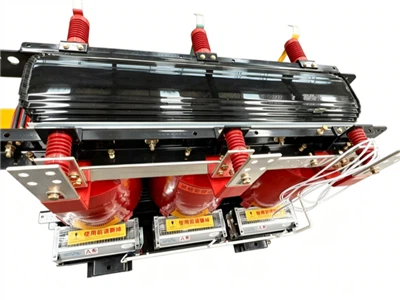
We provide extensive technical support to our clients. Our engineering team is available to answer any questions regarding the phase relationship and its implications for the application. We also offer customized solutions based on the specific needs of our clients, taking into account the phase relationship and other technical parameters.
Low Voltage Switchgear In conclusion, understanding the phase relationship between the primary and secondary voltages in a step – down transformer is essential for proper design, operation, and performance. At our company, we are committed to providing high – quality step – down transformers with accurate phase relationships. If you are in need of step – down transformers or have any questions about their technical specifications, including the phase relationship, we encourage you to contact us to discuss your procurement needs. We look forward to working with you to provide the best solutions for your electrical applications.
References
- Chapman, S. J. (2012). Electric Machinery Fundamentals. McGraw – Hill.
- Say, M. G. (1983). The Performance and Design of Alternating Current Machines. Pitman Publishing.
Huachi Electric Co., Ltd.
We’re well-known as one of the leading step down transformer manufacturers in China, featured by quality products and good service. Please rest assured to buy customized step down transformer made in China here from our factory. Contact us for more details.
Address: Plastic Park, Tongyu Street, Luqiao District, Taizhou City, Zhejiang Province
E-mail: HCDQ2026@163.com
WebSite: https://www.huachi-electric.com/
