How accurate are GPS trackers? If you’ve ever relied on a GPS device to find a missed delivery, track a vehicle’s route, or keep tabs on an elderly loved one, you’ve probably asked this question too. As a GPS tracker supplier, I’ve spent years answering it for customers—ranging from small business owners managing fleets to families using trackers for pet safety. The truth is, accuracy isn’t a one-size-fits-all number. It depends on a mix of technology, environment, and even how you use the device. Let’s break this down, with the real-world context I’ve seen firsthand working with thousands of customers. GPS Tracker

First, let’s start with the basics: what “accuracy” actually means for GPS trackers. Most of us see a number like “10 feet” in a product description and assume that’s how close the device is to its actual location. But that’s not the full story. GPS works by triangulating signals from at least four satellites orbiting 12,000 miles above Earth. Those satellites send precise timestamps and location data, and the tracker calculates its position by measuring how long it takes signals to reach it from each satellite. The margin of error comes from tiny delays in those signals—like atmospheric interference, or something as simple as a tree canopy blocking a signal. A “10-foot accuracy” rating is the ideal, open-sky number, not what you’ll get in every scenario.
From my experience with our own trackers, most residential and commercial GPS trackers deliver between 5 and 20 feet of accuracy in open areas: parking lots, highways, rural fields. But there are common scenarios where that drops, and it’s not just about the hardware. Let’s talk about one of the most frequent issues I hear from fleet customers: urban canyons. If you’re driving through downtown with tall skyscrapers lining the streets, those buildings reflect and block satellite signals. Our trackers will often switch to using cell tower signals to fill the gap, and cell tower accuracy is usually 50 to 150 feet. That’s not a flaw in our product—that’s physics. Last quarter, a local food delivery customer called us upset because his tracker was showing his van 100 feet from his actual location while he was in the city. We walked him through the urban canyon explanation, and he adjusted his expectations, realizing the tracker was still working as intended for his needs.
Another big factor: the type of GPS technology inside the tracker. Older trackers used basic GPS (often called Standard Positioning Service, or SPS) that only uses unencrypted signals available to everyone. That’s the tech you’ll find in most low-cost, $10 trackers, which usually have 15 to 30 feet of accuracy in open areas. Premium trackers, like the ones we supply, often add Assisted GPS (A-GPS) or even multi-band GPS. A-GPS uses nearby cell towers and Wi-Fi hotspots to speed up signal acquisition and refine location data, cutting error by 2 to 5 feet. Multi-band GPS, which uses two different frequency signals (L1 and L5), is even more resistant to interference from trees, buildings, and weather. Last year, a landscaping customer told us his tracker was off by only 7 feet when he was working under dense oak trees, compared to a 25-foot error on an old single-band tracker he’d used before. That’s the difference the extra tech makes.
Then there’s the update rate, which a lot of customers overlook when judging accuracy. A tracker that only updates its location once every 10 minutes might have a tight 10-foot accuracy, but if you’re driving 60 mph, that 10-minute gap means you’re tracking where the vehicle was, not where it is. For fleet trackers, we recommend a 10-second update rate for urban driving and 1-minute for highway, because that balances accuracy with battery life. A customer who runs a taxi fleet switched to our trackers last year; before, his old tracker updated every minute, so he’d miss when a driver took a detour to pick up a last-minute fare. With our 10-second updates, he can see his drivers’ exact location at any time, which has cut his missed deliveries by 18% this year.
Weather also plays a role, though it’s less impactful than you might think. Heavy rain, snow, or thick cloud cover can slightly weaken satellite signals, but most modern trackers are built to handle that. The big weather culprit is solar flares, but those are rare and affect the entire GPS network, not just one device. We test our trackers in simulated heavy rain and snow, and in all but extreme solar activity, the accuracy stays within our advertised range. Last winter, a customer in northern Minnesota told us his tracker worked perfectly during a blizzard, with only a 10-foot error while he was driving on the highway—no worse than a sunny day.
Now, let’s talk about the myths I hear all the time from new customers. The biggest one: “A cheaper tracker will give me the same accuracy.” That’s rarely true. Our entry-level commercial tracker is around $40, and it delivers 10 to 15 feet of open-sky accuracy. A $10 tracker from a big-box store might advertise “5 feet,” but that’s a marketing gimmick. Those low-cost trackers often use only SPS GPS, no A-GPS or multi-band tech, and their update rates are slow. I once tested a $12 tracker a customer brought in because he thought his was broken—its accuracy was 50 feet on a clear day, and it took 3 minutes to lock onto satellites every time he turned it on. That’s not a tracker working as intended; that’s a device cut corners on quality.
Another myth: “Indoor tracking is as accurate as outdoor.” GPS doesn’t work indoors at all, actually—satellite signals are too weak to penetrate walls, so most trackers switch to Wi-Fi or Bluetooth for indoor location. Wi-Fi accuracy is usually 20 to 50 feet, and Bluetooth is 10 to 30 feet, but that depends on how many Wi-Fi hotspots are nearby. For customers tracking assets in a warehouse, we recommend combining our GPS trackers with Bluetooth beacons if they need indoor accuracy within 15 feet. A retail customer used that setup last year to track inventory in a 50,000-square-foot store; he could tell exactly where a pallet of toys was, not just that it was “in the store.” That’s a custom solution we’ve built for customers who need more than just outdoor tracking.
So, how do you get the most accurate GPS tracking? It’s about matching the tracker to your needs. If you’re tracking a pet on a hike, a portable tracker with A-GPS will give you 10 to 15 feet of accuracy in the woods. If you’re tracking a delivery van in the city, a tracker with multi-band GPS and frequent updates will work best. If you’re tracking a child at a mall, a combination of GPS and Wi-Fi will do the job.
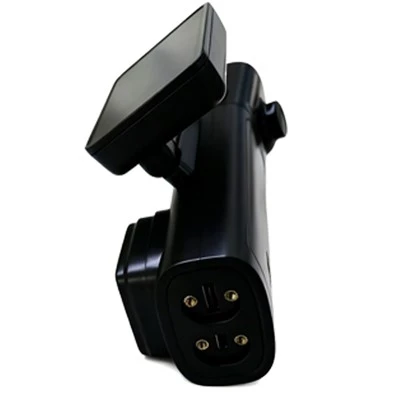
At the end of the day, accuracy matters most when it works for what you’re using it for. No tracker will be perfect in every environment, but a quality tracker from a reliable supplier will deliver consistent performance for your specific use case. If you’re in the market for a GPS tracker for your fleet, pet, family, or business, we’re here to help you find the right one. We offer custom setups, testing, and support to make sure your tracker works as accurately as you need it to. Reach out to us to discuss your requirements, and we’ll walk you through our options to find the perfect fit.
GPS Tracker References
- U.S. Department of Transportation. (2022). Global Positioning System (GPS) Accuracy and Performance. Federal Aviation Administration.
- National Institute of Standards and Technology. (2021). Assisted GPS (A-GPS) Technology and Location Accuracy. NIST Special Publication.
- GPS World. (2023). Urban Canyon Interference and GPS Mitigation Strategies. GPS World Magazine.
- International Society of Automobile Engineers. (2022). Multi-Band GPS for Automotive Telematics. SAE International Journal of Connected and Automated Vehicles.
Shenzhen Xuneng Chuangxiang Technology Co., Ltd.
Shenzhen Xuneng Chuangxiang Technology Co., Ltd. is one of the most professional GPS tracker manufacturers and suppliers in China, featured by quality products and good service. Please rest assured to buy bulk customized GPS tracker made in China here from our factory. For price consultation, contact us.
Address: Room 515, Fuxiang Building, No.1 Wenming Road, East Zone, Baishixia Community, Fuyong Subdistrict, Bao’an District, Shenzhen City
E-mail: xn.sungang@gmail.com
WebSite: https://www.szxunneng.com/
