As a storage tank supplier, I spend a lot of time on job sites and talking to plant managers who tell me the same thing over and over: they worry about their storage tanks’ fire safety. It’s not hard to see why—whether you’re storing crude oil, chemicals, or even food-grade liquids, a tank fire or explosion can shut down operations for weeks, cost thousands in repairs, and put your team at risk. I’ve seen it first-hand: a mid-sized chemical plant lost a 50,000-gallon tank to a fire two years ago because a safety measure they’d cut corners on failed. That’s why I’ve made it my job to understand exactly what fire safety measures work, and how tank suppliers like us can help implement them from the first day a tank goes into service. Storage Tank
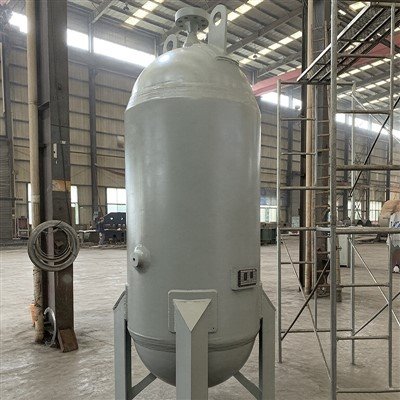
Let’s start with the basics that no one should skip: tank design itself. When we engineer a storage tank, we don’t just focus on holding liquid—we build it to resist fire. One of the first things clients ask about is fire-resistant coatings. Wait, not just any coating. There’s intumescent coating, which expands when exposed to heat to create a thick, insulating layer between the tank wall and the fire. I remember a customer storing diesel told me he thought regular paint was enough, but after a quick test we did in our warehouse, he realized his mistake. A small torch on the wall for 15 minutes melted regular paint but barely made a mark on the intumescent coating we supply. That’s a difference that could save a tank in a real fire. We also specify double-wall construction for tanks holding flammable or toxic liquids. If the outer wall gets damaged in a fire, the inner wall acts as a backup, preventing leaks that would turn a small incident into a disaster. Double walls add a little to upfront costs, but our clients tell us the peace of mind is worth it.
Next, ventilation systems. It sounds simple, but poor ventilation is a top cause of tank fires. When volatile liquids evaporate, they form vapor that’s heavier than air, sinking to ground level or pooling in low areas around the tank. If that vapor ignites—from a spark, static electricity, or even sunlight hitting a metal surface—it can explode. That’s why we always recommend pressure-vacuum (P-V) valves on every tank. These valves let air and vapor escape slowly when the tank is filling or emptying, so you don’t get a buildup of flammable gas. I once worked with a small refinery that had a tank without P-V valves; when they pumped gasoline in too fast, the pressure built up and ruptured a small seam. Luckily no one was hurt, but they installed P-V valves right after. We also partner with clients to add mechanical ventilation around tank farms, especially in enclosed spaces, to keep vapor levels below the lower explosive limit (LEL). For most flammable liquids, that LEL is around 1-5% vapor in air—ventilation systems make sure you never get close to that.
Static electricity is another silent fire hazard I see all the time. When liquid flows through a pipe, especially fast, it generates static charge. If that charge builds up and discharges a spark near flammable vapor, you have a fire. So our storage tanks are designed with grounding systems: copper cables that connect the tank to a ground rod driven deep into the earth, usually at least 8 feet down. We test every grounding system when we deliver a tank to make sure the resistance is below 10 ohms, which is the industry standard for static control. We also supply bonding clamps for hoses and pipes connected to the tank. A lot of workers forget to bond a transfer hose to the tank before pumping, but that small step prevents static buildup between the hose and tank wall. I’ve trained hundreds of workers on that—often, the simplest steps are the most overlooked.
Then there’s fire detection and suppression systems, which are non-negotiable. For large tank farms, automatic fire detection is key. We recommend thermal detectors and flame detectors, not just smoke detectors. Smoke detectors work for regular fires, but tank fires start with intense heat and a bright flash—flame detectors can spot that in less than a second, way faster than smoke would. Once a fire is detected, the next line of defense is suppression. We work with clients to choose between two main systems: foam suppression and water sprinklers. Foam is better for flammable liquid fires because it forms a blanket that cuts off the fire’s oxygen. We supply foam concentrates that are compatible with different liquids—for crude oil, we use protein-based foam, while for chemicals, we talk through the best type with the client to make sure it works. Sprinklers are good for cooling the tank wall to keep the structure from failing, but they don’t put out the fire itself. That’s why we usually install both: sprinklers to protect the tank, and foam systems to attack the fire. A customer storing jet fuel told us his foam system activated last year when a small spill ignited—they put out the fire in 2 minutes, no damage to the tank. That’s exactly what we design for.
We also can’t forget about tank bunding, or secondary containment. A lot of people call it a “tank’s safety net.” Bunds are walls around each tank (or a whole tank farm) made of concrete or impermeable material. If a tank leaks, the bund holds the liquid so it doesn’t spread and catch fire. We size bunds to hold at least 110% of the tank’s capacity, per OSHA standards. I once saw a tank farm where a bund was only 80% of the tank size; when a gasket failed, 10,000 gallons of oil spilled into the farm, and if a fire had started, it would have burned all the tanks. After that incident, the plant installed new bunds we supplied, sized correctly. Bunds also make it easier to contain a fire—you don’t have liquid spreading across the site, so suppression systems can focus on one area.
Regular maintenance is the final piece of the puzzle, and as a tank supplier, we don’t just deliver tanks and walk away. We offer annual safety inspections for our clients, because even the best-designed tank needs upkeep. Things we check during inspections: P-V valves to make sure they’re not clogged with dirt or debris, grounding systems to confirm they’re still connected properly, and coatings to look for cracks or peeling that would leave the tank wall vulnerable. A few months ago, we inspected a tank where the intumescent coating had peeled in a small spot, and we re-applied it before it became a problem. We also train our clients’ maintenance teams on what to look for—like signs of corrosion on the tank floor, which can weaken the structure and make it more likely to fail in a fire.
I know that for many plant managers, fire safety feels like a long list of rules that add to costs, but here’s the truth: investing in the right measures upfront saves you money in the long run. A tank fire can cost millions in downtime, repairs, and fines, not to mention putting your team at risk. At our company, we don’t just sell storage tanks—we work with you to build safety into every part of the tank, from design to ongoing maintenance.
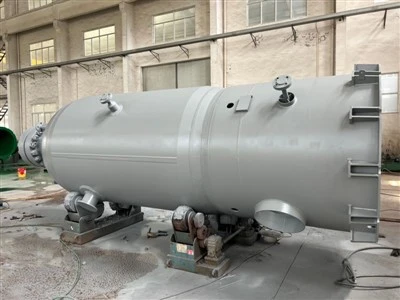
If you’re looking to upgrade your current tanks, install new ones, or just want to review your fire safety measures, I’d be happy to talk through what works for your specific needs. Whether you’re storing chemicals, fuel, or industrial liquids, we can help you find solutions that keep your operations safe and compliant. Reach out to our team to schedule a consultation—we’ll come to your site, look at your setup, and give you clear, practical advice tailored to your business.
Storage Tank References
- OSHA 1910.106 – Flammable and Combustible Liquids Standards
- National Fire Protection Association (NFPA) 30 – Flammable and Combustible Liquids Code
- API Standard 650 – Welded Steel Tanks for Oil Storage
- International Fire Code (IFC) Chapter 33 – Storage Tanks and Spill Containment
Jiangsu Minheng Engineering Equipment Co., Ltd.
As one of the most professional storage tank manufacturers and suppliers in China, we also support customized service. Please feel free to buy advanced storage tank made in China here and get pricelist from our factory. For price consultation, contact us.
Address: No.18 Xinjiang Road, Jingjiang City, Taizhou City, Jiangsu Province, China
E-mail: 15190632575@163.com
WebSite: https://www.mhvessel.com/
