If you’ve ever spent time on a shop floor, you know how much a single tool’s performance can make or break a job. Last month, a customer reached out to me frustrated: they were using a generic flat end mill for slotting operations in 1045 steel, and every pass left them with chip buildup that burned the tool edge, scratched the workpiece, and forced them to stop every 10 minutes to clear chips. When I asked what they were looking for in an end mill, their first question was, “How well does this thing actually evacuate chips?” It’s not a trivial question—chip evacuation isn’t just a side note; it’s the core of a flat end mill’s ability to produce a consistent, high-quality cut without downtime. Flat End Mill
Let’s break this down simply, no overly dense engineering jargon, because I’ve found that too many suppliers hide behind specs that don’t connect to what actually happens on the mill. First, what is chip evacuation, anyway? When a flat end mill spins and cuts through material, it doesn’t just shave off tiny bits—those bits, called chips, have to move out of the cut zone. If they get trapped between the tool and the workpiece, they can weld to the cutting edge, cause heat buildup that softens the tool, and even mar the surface finish of the part. For a flat end mill, which is used for everything from slotting and pocketing to face milling, poor evacuation turns a $5 tool into a $50 paperweight in a matter of minutes.
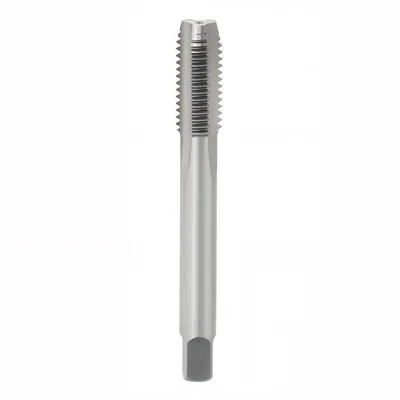
Now, how does a flat end mill’s design directly impact its chip evacuation? Let’s start with flute geometry. The flutes are the spiral grooves that wrap around the end mill; they’re the pathways the chips take to escape. Too shallow, and there’s not enough space for the chips to form and move. Too steep, and the tool loses rigidity, especially when cutting deep slots. As a flat end mill supplier, we test every flute angle in steel, aluminum, and even exotic alloys, and we’ve found that a 30 to 35 degree helix angle strikes the sweet spot. It’s aggressive enough to lift chips out of the cut zone quickly, but not so steep that the tool bends under load when you’re taking heavy cuts.
Flute count matters too, and it’s a common point of confusion. Some people think more flutes mean faster cuts, but that’s only half the story. For soft materials like aluminum, more flutes (4 or even 6) give a smoother finish, but they leave less space between flutes for chips. That’s why we offer a 2-flute flat end mill exclusively for non-ferrous metals—it has extra space between the grooves, so chips don’t get stuck. For hard materials like hardened steel, we use 3-flute tools. They give better rigidity than 2-flute, and more space than 4-flute, so chips can escape without packing. A lot of generic suppliers just push 4-flute tools for every job, but that’s lazy. If you’re slotting in 4140 steel, a 4-flute end mill will pack chips and ruin the tool before you finish the first pocket.
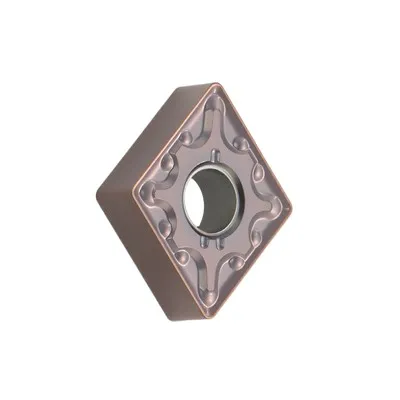
Another big factor is chipbreaker design—wait, not just for inserts, even solid flat end mills have small chipbreakers built into the cutting edges. A good chipbreaker breaks long, stringy chips into small, manageable pieces instead of letting them curl around the tool. Long chips are the worst for evacuation; they can wrap around the tool shank, snag on the workpiece, and force you to shut down the mill. Our flat end mills have a curved chipbreaker along the primary cutting edge that works with the flute geometry to snap chips into short chunks as they form. I’ve seen customers switch from a generic end mill with no chipbreaker to ours and cut the number of tool changes per job by 70%. That’s not a number I pull out of thin air—we track it on every trial.
It’s also important to tie chip evacuation to the material you’re working with, because there’s no one-size-fits-all. Let’s run through a few common scenarios, since that’s what our customers deal with every day. If you’re milling aluminum, which is soft and produces long, stringy chips, you need an end mill with wide flutes and a polished coating. The polish reduces friction between the chip and the flute wall, so the chip slides out instead of sticking. We use a TiAlN variant for aluminum cuts that has a mirror-like finish on the flutes, and our customers say it cuts evacuation time in half compared to unpolished tools. For steel, which produces thicker, denser chips, you need a sturdier core and flutes that are sized to handle heavier chip loads. We add a core thickness that’s 70% of the tool diameter for our 3-flute steel-specific end mills—core thickness adds rigidity, so you can take deeper cuts without the tool flexing, which helps chips clear instead of getting pinched between the tool and the workpiece.
I know what some of you are thinking: “I can just crank up coolant to fix chip evacuation, right?” Coolant helps, but it’s not a replacement for a well-designed end mill. Too much coolant can cause thermal shock on the tool, especially when you’re cutting hard metals, and it doesn’t address the root problem of trapped chips. I once had a customer who was flooding a slotting operation with 100 PSI of coolant, but they were still getting chip buildup because their generic end mill had narrow flutes. We swapped in our steel-specific flat end mill, cut the coolant pressure to 50 PSI, and they saw better chip evacuation, longer tool life, and a smoother surface finish. The tool design did more for them than the extra coolant ever did.
Wait, let’s talk about a common mistake people make when evaluating chip evacuation: they only test shallow cuts, like 1/4 inch depth, and call it good. But when you’re doing deep slotting, like 1.5 inch depth, chip evacuation becomes way more demanding. The chips have to travel a longer distance up the flute, and the pressure in the cut zone is higher. Our flat end mills are engineered for consistent performance even at full depth of cut. We tested one customer’s job where they were slotting 1045 steel at 1 inch depth with a 1/2 inch end mill. Their previous tool would jam after 2 minutes of cutting, but ours ran for 12 minutes on the same setup before needing a tool change. That’s the difference between a tool designed for real shop floor work and one that’s made for catalog specs.
Another point: surface finish ties directly to chip evacuation. If chips get trapped, they can rub against the side of the end mill’s land, leaving marks on the workpiece. Poor evacuation leads to inconsistent finish, which means extra deburring time, or even scrapped parts. We’ve had customers come to us who were scraping 5% of their parts due to surface finish issues, and after switching to our flat end mills with better chip evacuation, that scrap rate dropped to less than 1%. It’s a hidden cost most people don’t account for—downtime for tool changes, scrap parts, deburring labor—all add up, and good chip evacuation eliminates most of it.
Let’s also address a myth I hear all the time: “A higher price means better chip evacuation.” Not always. We’re a flat end mill supplier, and we’ve found that some mid-priced tools have better flute geometry and chipbreakers than name-brand tools that mark up for branding. The key is looking at the details: flute width-to-core-thickness ratio, helix angle, chipbreaker shape, and coating. We don’t cut corners on any of those, which is why our customers come back again and again. We test every batch of tools in our own in-house mill, so we know exactly how they perform in real conditions, not just in a lab.
So, what does this mean for your shop? If you’re dealing with frequent tool changes, scrapped parts, or downtime from chip buildup, the first thing to check is your flat end mill’s design. It’s not just about the brand name or the number of flutes—it’s about how the flutes, chipbreakers, and core work together to move chips out of the cut zone. A well-designed flat end mill doesn’t just cut faster; it cuts smarter, with less waste and less hassle.
If you’re ready to see what a difference a properly engineered flat end mill can make for your operations, we’re here to help. We can work with you on custom tooling for your specific materials and cuts, or send you a trial tool to test on your next job. Don’t let poor chip evacuation hold your shop back—reach out to us to discuss your needs and find the right flat end mill for your application.
Flat End Mill References
- Dictionary of Manufacturing Technology. ASME International, 2020.
- Woodbury, R., Machining Fundamentals. Industrial Press, 2018.
- Smid, P., CNC Programming Handbook. Industrial Press, 2022.
- DeGarmo, E. P., Materials and Processes in Manufacturing. Pearson, 2019.
Small Craftsman (Shandong) Machine & Tools Co., Ltd.
Small Craftsman (Shandong) Machine & Tools Co., Ltd. is one of the most experienced flat end mill manufacturers and suppliers in China, also supports customized service with low price. Please feel free to buy bulk high quality flat end mill in stock here from our factory. Contact us for pricelist.
Address: No.9 Quanxin Rd., Sishui Economic Developing Zone, Jining, Shandong, China.
E-mail: 6196@ocutchina.com
WebSite: https://www.ocutooling.com/
