Hey there, fellow car enthusiasts and wheel nerds! Let’s cut to the chase—if you’ve ever upgraded your ride to a set of forged wheels from our shop, you’ve probably wondered at some point: “Do I need to inflate my tires differently now that I’m running these bad boys?” I get it, when you swap out stock steel or cast aluminum wheels for forged ones, everything feels different. The ride might be tighter, the weight is way lower, and suddenly your go-to tire pressure number from the old setup doesn’t seem like it fits anymore. As a forged wheels supplier who’s fielded this question a hundred times (okay, maybe a thousand), I’m here to break this down like we’re geeking out in a garage—not in some stiff engineering manual. Forged Wheels
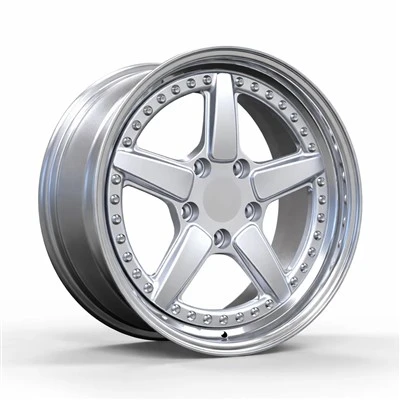
First, let’s recap what makes forged wheels different, because that’s the root of this whole tire pressure question. Forged wheels aren’t cast—they’re made from a solid block of aluminum (or sometimes even magnesium, for the real speed freaks) that’s pressed and hammered at insane pressures (think thousands of tons) instead of being melted and poured into a mold. The result? They’re way stronger, lighter, and more rigid than cast wheels. A lot of people think “stiffer = different pressure,” and yeah, that part’s true—but not in the way you might guess. Let’s start with the basics: tire pressure does three main jobs: supports the weight of your car, provides a contact patch with the road, and cushions the ride from bumps. Forged wheels change two of these things directly: weight and strength.
Here’s the first big myth I hear all the time: “Forged wheels are lighter, so I need lower tire pressure.” Wait, hold on—let’s do the math. Stock cast wheels for a sedan might weigh 22 lbs each, while a comparable forged wheel is around 15 lbs. That’s 7 lbs less per wheel, or 28 lbs total. Your car’s total weight is like 3,000+ lbs, so 28 lbs is barely 1% of that. The tire’s inflation pressure supports almost all of the car’s weight—not the wheel, not the tire itself. So if you were running 35 PSI on your stock cast wheels, going 34 PSI on lighter forged ones isn’t a huge shift. But wait, there’s a catch here: unsprung weight. Unsprung weight is the stuff that isn’t supported by your suspension—wheels, tires, brakes. Lighter unsprung weight means the suspension reacts way faster to bumps, and the tire’s contact patch stays flat on the road even when you’re carving corners. That means if you run the same pressure you did before, you’ll actually have a slightly larger, more consistent contact patch—wait, so that’s a good thing, not something you need to adjust for?
Then there’s the other side: forged wheels are way stronger than cast. Cast wheels can crack if you hit a pothole too hard, but forged wheels bend (or they don’t bend at all, but they’re way less likely to crack). A few years back, a customer brought in his set of our 19-inch forged wheels after hitting a curb at 40 MPH—scuffed the heck out of the lip, but no cracks, no structural damage. If that had been cast, he’d have a new wheel and a bent rim. So does strength mean you can run lower pressure? Absolutely not. Wait, why? Because lower pressure makes the tire sidewall flex more. Too much flex, even on a strong forged wheel, and you risk something called “tire squirm” or even a sidewall blowout if you’re cornering hard. Also, if you run way too low, the bead of the tire (the part that clips to the wheel) can slip. Forged wheels have a super smooth, precision-machined bead seat, but that doesn’t mean a loose bead is okay. I’ve seen customers run 20 PSI on their performance forged wheels and then show up with a tire that’s come off the rim during a track day. Bad news—for you and your car.
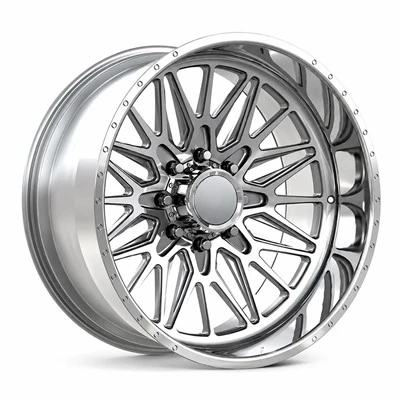
So when do you actually need to adjust tire pressure for forged wheels? Let’s get specific. First, if you’re moving from heavy, off-road-style cast wheels (think 17-inch steelies or heavy cast off-road wheels) to lightweight forged off-road wheels, then yeah, you might need to tweak. Off-road tires are thicker, and lower pressure is good for grip in mud or sand—but if your wheels are 5 lbs lighter per corner, running the exact same pressure could make your tire flex too much on hard rock surfaces. I’d suggest dropping 2-3 PSI from your off-road stock pressure, but no more than 5 PSI. That’s a safe sweet spot.
Second, if you’re running wide forged performance wheels (like 11+ inches wide on a rear wheel for a muscle car or sports car) vs. your stock narrow cast wheels. Wide tires need a specific pressure to maintain the correct contact patch. Stock narrow tires (8-9 inches wide) often run 32-35 PSI, but a 11-inch wide performance tire on a forged wheel needs a bit less pressure—like 28-30 PSI. Why? Because a wider tire has more surface area, so the same pressure spreads out more. Too much pressure on a wide tire, and it’ll only touch the middle of the tread, which is bad for grip and wears the center out fast. Too little, and you’ll rub the inner fender or have sidewall damage when you’re accelerating hard. Our shop gets tons of customers who upgrade to wide forged rear wheels and accidentally run the old narrow tire pressure, and they’re shocked when the tire wears out in 10k miles instead of 30k. That’s the kind of mistake we help them fix every day.
Third, track day vs. street pressure. If you’re using your forged wheels for track days, that’s when you’ll want to adjust more. Street pressure is usually set for comfort and fuel efficiency, but track days are all about performance. Forged wheels hold their shape way better under heavy cornering loads than cast wheels, so you can run a slightly lower pressure on the track than you would on the street. But here’s the pro tip: always check your tire’s sidewall for the maximum cold pressure. Don’t go over that, no matter how cool your forged wheels look. I’ve been to track events where guys with super expensive forged wheels are running 22 PSI on track, and their tires blow out halfway through the session. It’s not the wheel’s fault—it’s the pressure being too low. Forged wheels are tough, but tires have their limits too.
Wait, let’s talk about a common mistake people make: using the sticker on the driver’s door jamb as the be-all end-all. That sticker is for the stock wheels that came with your car. If you’ve upgraded to forged wheels, that number is almost never right. The door sticker is based on the stock wheel’s weight, size, and the car’s original setup. Forged wheels are different, so you need to calculate your own. A quick way: if you’re running stock-sized forged wheels (same diameter and width as stock), stick within 1-2 PSI of your original door number. If you went wider or larger, adjust for the tire’s width, not the wheel’s.
Another thing: tire pressure changes with temperature, and forged wheels might feel different when they’re hot. Because forged wheels conduct heat better than cast wheels (they’re a denser aluminum, so heat moves through them faster), your tires will warm up quicker during driving. That means if you inflate to 30 PSI cold, after a 30-minute drive you’ll be at 35 PSI, which is normal. Don’t panic and add pressure when you’re hot—wait until the tires are cold. That’s a rule, no matter what wheels you run, but it’s extra easy to notice with forged wheels because the heat transfer is so obvious.
Let me throw in a real example from our shop. Last year, a customer bought a set of our 20-inch forged monoblock wheels for his BMW M3. He came in saying his tires were wearing out the center tread way too fast. We checked his pressure, and he was running 35 PSI—exactly what the door jamb said. His new wheels were 10 inches wide, vs. the stock cast wheels which were 8.5 inches wide. The wider tire needed 30 PSI. We dropped it to 30, and when he came back 6 months later, his tire wear was perfect—even across the entire tread. That’s the kind of thing we see all the time, and it’s why we always ask customers about their tire setup when they buy forged wheels from us.
Wait, so to sum this up—do forged wheels require a different tire pressure? The short answer is: not a huge different, but sometimes a small, targeted adjustment based on your wheel size, use case, and tire width. It’s not one-size-fits-all, and it’s definitely not just “lower pressure because forged is lighter.”
Here’s the key takeaways I want you to remember:
- Forged wheels are lighter than cast, but that barely affects tire pressure—your car’s weight is way bigger than the wheel’s weight.
- If you go wider forged wheels (for performance or a certain look), drop pressure 2-5 PSI to match the wider tire’s contact patch.
- Off-road forged wheels? Drop 2-3 PSI from your old off-road cast wheels, but don’t go too low.
- Track days? Lower a bit from street pressure, but never exceed the tire’s max cold pressure.
- Ditch the door jamb sticker when you upgrade—use the tire’s specs and your wheel’s new size instead.
At the end of the day, forged wheels are an upgrade to your ride’s strength, weight, and style, but they don’t rewrite the rules of tire pressure. That said, if you’re confused about what pressure is right for your new forged wheels, our team here can help. We’ve been working with forged wheels for years, and we’ve dialed in pressure for everything from daily drivers to track cars to off-road rigs. Whether you’re picking up a new set or just have a question about your current setup, hit us up to chat about what works for your ride.
Now, if you’ve got more questions about forged wheels, tire pressure, or anything else wheel-related, don’t hesitate to reach out. We’re here to make sure your setup is safe, performs great, and looks as sick as your car deserves.
Forged Truck Wheels References:
- Tire Pressure Basics, National Highway Traffic Safety Administration (NHTSA)
- Forged vs. Cast Wheel Properties, Society of Automotive Engineers (SAE) International
- Tire Contact Patch and Pressure Correlation, Rubber Manufacturers Association (RMA)
- Unsprung Weight Effects on Vehicle Dynamics, International Journal of Automotive Technology, 2019
- Tire Pressure Guidelines for Aftermarket Wheels, Tire Industry Association (TIA)
Hurong (Ningbo) Wheels Co., Ltd.
Hurong (Ningbo) Wheels Co., Ltd. is one of the most professional forged wheels manufacturers and suppliers in China, also supports customized service and OEM service. Welcome to wholesale bulk high quality forged wheels made in China here from our factory. If you have any enquiry about cooperation, please feel free to email us.
Address: Floor.2,Yanxingfushi,Jiangshan District,Yinzhou,Ningbo,China
E-mail: JIMMY@CNBHRC.COM
WebSite: https://www.hrc-wheel.com/
